
Casual puzzle
Short sessions, gentle difficulty and a board that resets in seconds. Cheap to produce, brutally competitive on the store, and the genre where level design quality decides everything.
Genre decides your budget more than any other single choice. It sets the art volume, the server bill, the length of the content pipeline and how long a title stays live before it needs a sequel.
Short sessions, gentle difficulty and a board that resets in seconds. Cheap to produce, brutally competitive on the store, and the genre where level design quality decides everything.

One mechanic, one thumb, no tutorial. Built in weeks and validated with paid creative tests before the game itself is finished. Revenue comes from rewarded video, not purchases.
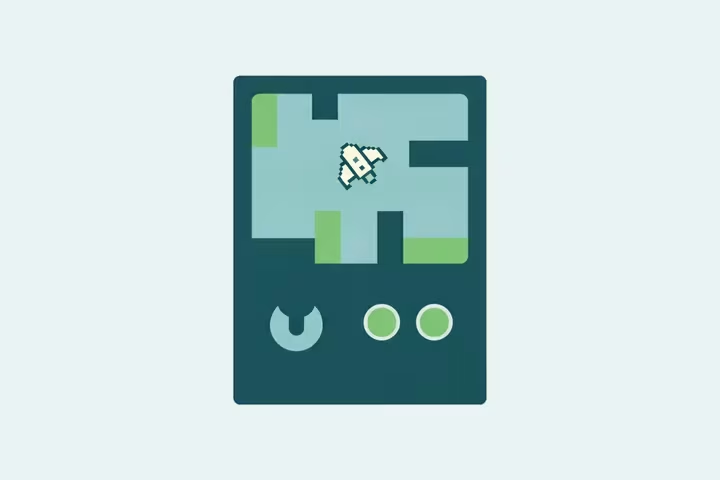
Reflex play with a rising score and an instant restart. Frame pacing matters more than content volume here, which is why this genre punishes studios that skip performance work.
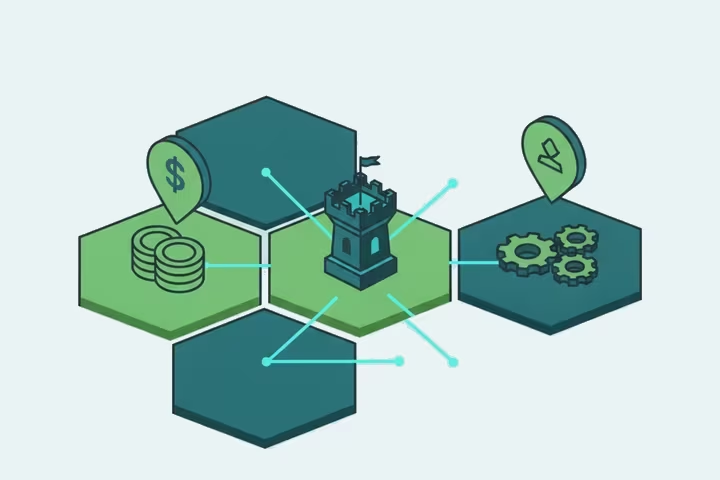
Long sessions, resource loops and an economy that has to stay balanced for years. The most expensive category to build and the one with the highest lifetime value per player.

Characters, progression and story arcs. Demands real art direction, a writing budget and a content pipeline that keeps producing after launch instead of stopping at version one.

Play in service of a curriculum, often bought by parents or schools rather than players. Accessibility, privacy compliance and measurable progress reporting are part of the specification.
The difficulty is unevenly distributed. Casual and hyper-casual titles are cheap to build and brutally hard to market, while strategy and role playing games are expensive to build and far easier to retain once a player is invested.
For a first release on a fixed budget, most studios we assessed give the same advice: narrow the genre, ship one loop that works and keep a content pipeline running afterwards instead of spending everything on launch day.
Whichever category you pick, write down the first sixty seconds of play in plain sentences before briefing anyone. If those sentences are vague, the problem is the game design rather than the development partner.
 Juno
Studio research assistant
Juno
Studio research assistant